A well-run emergency reaction begins long prior to the alarm system. It begins with a chief warden who recognizes the building, the people inside it, and the messy reality of how emergencies unfold. I have actually seen emptyings prosper since a chief warden maintained their head while every little thing else tried to go sidewards, and I have actually seen them fail when the fundamentals were missed. If you are entering the role, or responsible for appointing one, this overview lays out what proficiency resembles in method, the training that underpins it, and the standards that help you prove it.
What the chief warden in fact does
The chief warden leads the website's Emergency Control Organisation, or ECO. In ordinary terms, they collaborate individuals throughout an occurrence and make the judgment calls that influence everyone's security. That includes fires, clinical emergencies, chemical spills, power failures, escalator entrapments, and the all as well common false alarm that still calls for a disciplined reaction. The chief warden's responsibilities begin with avoidance and readiness, proceed with event control, and finish with organized recovery.
On a regular day, the chief warden checks that wardens are rostered, communication devices work, emptying courses stay clear, and any type of disabilities to fire systems are recognized and reduced. During an event, they take control from the emergency situation control point, validate the nature of the case, choose the initial reaction mode, and direct area wardens and wardens to sweep, isolate risks, help persons that require aid, and manage assembly locations. Later, they log the sequence, debrief, and drive improvements.
The title varies. Some organisations call the function chief fire warden or chief emergency warden. The core duties are the same, though a chief fire warden might have a more powerful concentrate on fire scenarios in a risky website, while a wider chief warden remit might consist of protection hazards, clinical feedbacks, and service continuity triggers.
Skills you can not fake
Crisis management looks glamorous theoretically, however in a smoke-logged hallway with alarms shouting and the elevator out of action, gloss paves the way to muscle memory. Chief warden requirements cluster right into decision-making, interaction, coordination, and technological proficiency. The complying with are not nice-to-haves, they are the spinal column of the role.
Decisive judgment under pressure. Occurrences reward those that act on limited details and update fast. The chief warden must choose whether to evacuate, safeguard in position, or phase a partial discharge, after that adjust as problems change. Wavering expenses minutes, and minutes price people.
Clear, succinct interactions. Throughout an alarm system, your words battle noise, fear, and radio congestion. Good principal wardens use short, straight phrases and repeat key orders. They validate crucial messages back, time-stamp actions, and avoid lingo that perplexes wardens or owners. If you have actually ever before tried to run a stairwell down-sweep while maintenance tricks into the panel and safety reports odor of smoke on degree 3, you understand brevity matters.
Span of‑control discipline. The chief warden hardly ever touches every floor personally. They work through location wardens and wardens, generally in a ratio that maintains the chain of command clean. They stay clear of freelancing and stand up to need to micromanage a solitary floor while blowing up of the rest.

Situational awareness. This sounds fluffy until you exercise it. A great chief warden assumes in maps. They know the structure's areas, staircase pressurisation, re-entry levels, fire door places, and the quirky choke points where people number. They keep in mind the climate if it impacts exterior assembly security, the time of day if https://jasperrdir675.timeforchangecounselling.com/what-colour-helmet-does-a-chief-warden-wear-decoding-warden-hat-tones it changes occupancy, and the maintenance status of fire indicator panels, EWIS, and reductions systems.
Calm authority. Individuals will certainly review your face before your words. A chief warden emits a determined tranquility that takes oxygen from panic. That tone carries over the PA, on the radio, and in your pose at the control point.
Documentation self-control. Logs, headcounts, impairment authorizations, and debrief activities do not exist for bureaucracy's sake. They permit you to demonstrate due diligence, meet fire warden requirements in the workplace, and enhance the following response.
The training that develops those skills
In Australia, two units rest at the heart of warden and chief warden training. They map to the nationwide structure and offer a regular baseline.
PUAFER005 operate as part of an emergency situation control organisation. This is the foundational fire warden course that constructs sensible skills for wardens and area wardens. A good puafer005 course covers alarm recognition, ECO framework, interaction protocols, discharge techniques, assisting mobility-impaired owners, and intermediary with emergency situation solutions. You want useful drills, not just theory. Genuine lessons come from relocating bodies down stairways, not checking out it.
PUAFER006 lead an emergency situation control organisation. This is the jump to leadership. A puafer006 course will certainly press you into scenario preparation, command and control, PA news, resource appropriation, and making evacuation mode decisions. It ought to consist of time at a fire indication panel and EWIS, running mock circumstances with injects that compel you to pivot.
Those two devices rest inside a broader program of warden training that must include yearly refresher courses and building-specific inductions. The nationwide systems offer you usual language and assumptions. The website induction offers you fact. In one building I supported, the basement had a reduced ceiling and a tangle of service runs that caught warm. A book approach to a parking area fire needed change or you would push hot smoke straight up the ramp toward the main entrance. You just find out that on site.
If your procedure includes multiple states or complex risks, look for a chief warden course that blends PUAFER006 with extra components like bomb risk assessment, hostile trespasser treatments, and organization continuity causes. Some providers plan chief fire warden training with desktop workouts for the monitoring team. That is cash well invested. Emergency situations touch HR, IT, safety, and media. You want aligned playbooks.
Experience that separates experienced from excellent
Reading and certificates matter. So does time on the devices. The best chief wardens build up behaviors constructed from drills, near-misses, and genuine alarms.
Plan and run exercises across a range of times and tenancy profiles. A weekday morning discharge behaves differently from a Friday night when tenants hold occasions. Try a drill during rainfall and view what occurs at assembly factors. Rotate situations: fire in the riser cupboard, medical on degree 7 with a jammed lift, power failing in one tower yet not the other.
Build a lineup that covers absences. A chief warden gets ill, takes leave, or trips. Your ECO ought to have deputies and area wardens that can step up. In a multi-tenant site, bargain mutual aid with renter wardens and share radios or runners throughout large evacuations.
Practice communications till it really feels boring. That is the ideal degree. Standardise call indications, concur message layouts, and practice vital news. If your manuscript is verbose, cut it. Clarity beats poetry.
Walk the structure commonly. Stairways, roof covering hatches, plant areas, back-of-house corridors, and second exits all matter in a pinch. After one drill, we uncovered a service provider had piled refrigerator boxes in front of a fire door that hardly ever saw website traffic. The area looked neat from the primary corridor. The risk hid in the edge. Weekly strolls would have caught it sooner.
Get comfortable with fire systems. You do not require to be a professional, but you must check out the FIP, understand area seclusions, and understand what a difficulty versus alarm suggests on your details panel. On some EWIS, the emptying tone and the sharp tone have comparable patterns that perplex new wardens. Practice toggling zones and making real-time announcements in monitored training sessions.
Fire warden training requirements and refresh cycles
Fire warden needs vary by territory and building usage, but several patterns hold. Wardens, consisting of the chief warden, must finish official training and rejuvenate at routine periods. Yearly refreshers are conventional for high-occupancy or complicated websites. Two-year cycles might serve for low-risk environments, supplied you run drills at least two times a year and swear in brand-new team promptly.
Refreshers must not rehash slides. Usage current incidents and building modifications. If your website included a new occupant fit-out with gain access to control adjustments, run a drill that examines the brand-new badge visitors under emergency situation power. If a stairway pressurisation fault happened last quarter, clarify what transformed after the repair and include a circumstance that examines system performance.
For proof, keep training documents, attendance logs, and post-drill reports with action close-outs. Regulatory authorities and insurance companies take notice of the paper trail. Much more notably, the documentation reveals your group that constant enhancement matters.
Colour coding and visual cues
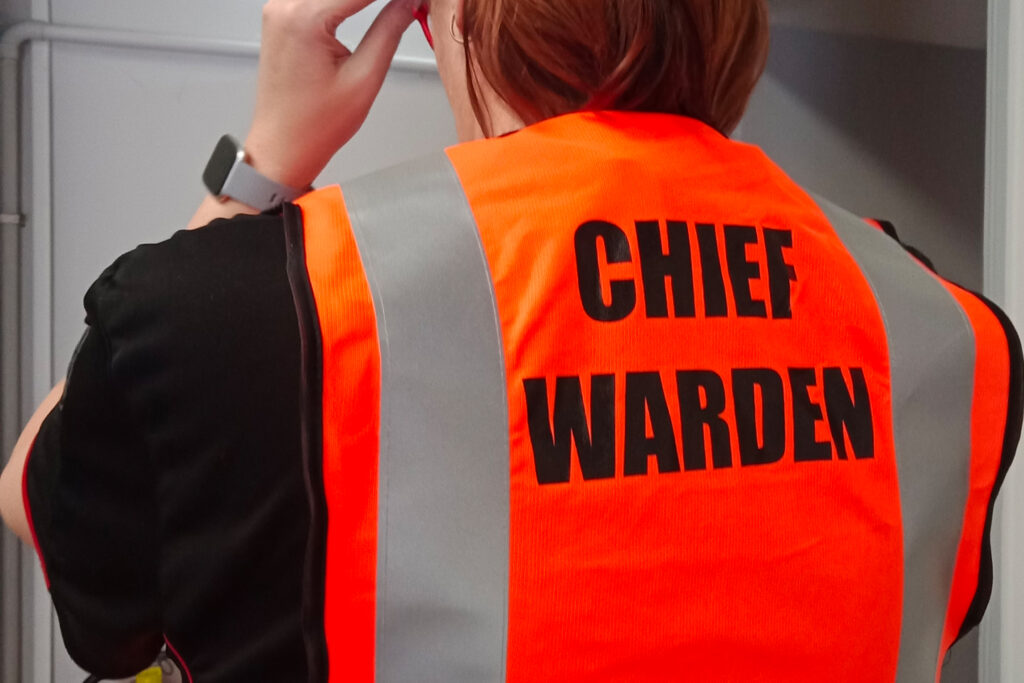
Wardens and primary wardens need to be instantaneously recognisable. That is where tabards, headgears, and hats been available in. Colour conventions vary by nation and in some cases by organisation, but in Australia, chief warden hat colour is typically white. The chief fire warden hat or helmet is white for the principal, while floor or area wardens commonly wear yellow. The deputy chief warden will certainly occasionally use white with a various stripe or a marked tabard so they are easy to find at the control point. In some offices, red signifies an interactions warden or a very first strike firemen, and green might be booked for first aid. If you are asking what colour helmet does a chief warden wear, validate your neighborhood criterion, after that make it constant across the site. Whatever you select, train it, label it, and stock spares.
There is one useful care. Hats and headgears help, but tabards are easier to save and faster to don, particularly for team who put on head coverings or operate in duties where a helmet is not practical. The best configurations keep both, using safety helmets for risky commercial websites and tabards for offices and retail.

The ECO in action: an example from the field
A multi-storey office tower, mid-morning. An odor of burning reported on level 12. The chief warden gets a telephone call from security and a simultaneous alert on fire warden training requirements the fire sign panel. The area suggests a detector in a comms room, a known location. The chief warden transfers to the control point, puts on the white tabard, and opens the EWIS. They switch degree 12 to alert tone and broadcast a quick statement: wardens examine, residents await instructions.
Area wardens on level 12 acknowledge on the radio. One approaches the comms space door. Warmth exists, door surface area warm, light smoke noticeable under the limit. They do not open the door. The chief warden escalates to emptying tone for degree 12 and the flooring above, then sends off wardens to handle stairwells and straight people far from the smoke path. Security isolates the heating and cooling to prevent spread. The chief warden calls the fire brigade if the system has not already done so automatically, and fulfills crews at the panel with a concise handover: presumed electric fire in a comms room, doors shut, partial emptying underway, no reported injuries, stairwells clear, lifts isolated.
The brigade shows up and extend. The chief warden holds the line, keeps various other floors on sharp, and appoints a runner to look at a lessee with 2 wheelchair individuals. Emptying progresses. Within minutes, firemens confirm a small shelf fire, managed swiftly. The chief warden maintains the discharge till the area is ventilated and the brigade gives the green light. After the incident, the chief warden records times, activities, and issues. The debrief causes a basic improvement: mount thermal detection inside comms cupboards and update the lessee's devices tons limits.
This is the work. Not significant, yet disciplined.
Certification pathways and what great training looks like
If you search for a warden course or chief warden course, you will certainly locate dozens of suppliers. Pick one that provides the national units, PUAFER005 and PUAFER006, via a recognized process and can show industry experience. Classroom time matters, however scenario-based sensible training is where most finding out lands. You want:
- Realistic simulations that use your building's formats, radios, and system. Trainers who have actually worked occurrences, not simply taught from a book. Assessment that includes decision-making, not simply rote recall. Clear positioning between puafer005 operate as part of an emergency control organisation and puafer006 lead an emergency control organisation, so wardens and chief wardens share language and expectations. Post-training devices like lists, quick-reference radio manuscripts, and debrief themes you can actually use.
Sit know a session if you can, or ask for recommendations from similar websites. A solid service provider will likewise help you shape your annual emergency management strategy, incorporate with specialists that keep your fire systems, and recommend on the tempo of drills.
Building the ECO: functions and structure
A chief warden does not carry the building alone. The ECO includes deputy chief warden, interactions officer, floor or location wardens, and wardens that move, help, and handle setting up points. In complex sites, you may add roles for residents with certain needs, first aid, and security integration.
Structure needs to match the structure's danger account. A high-rise with blended occupants may assign 2 area wardens per flooring to cover leave. A warehouse with shift work requires wardens across all shifts, not simply the day team. A laboratory requires wardens that understand containment procedures and know when a basic evacuation could make things even worse by pressing fumes right into public areas.
Match people to roles with purpose. Several of the best wardens I have seen are receptionists. They recognize that gets on website, maintain an awesome head under stress, and can route naturally. In heavy market, try to find staff leads that preserve discipline and recognize the plant. Your replacement chief warden need to be a person with authentic existence, not only a title holder.
The human side: residents who require added help
Fire warden requirements in the workplace need to represent individuals who can not come down fifteen flights quickly. People with short-term injuries, flexibility impairments, visual or hearing differences, late-stage pregnancy, stress and anxiety problems, and site visitors unfamiliar with the website require thoughtful preparation. Begin with Personal Emergency Discharge Plans. Maintain them discreet and functional. Identify buddy systems and refuge points. Equip stairwells with evac chairs and train wardens who are physically capable and comfortable using them. Do not presume the greatest person is the appropriate option. Strategy and self-confidence trump brute force.
During drills, replicate, do not do, specific motions if there is any type of threat of injury. Exercise the steps with devices in regulated problems. If a person favors to stay in place at a haven point under a defend-in-place strategy, write that right into the strategy along with communication methods and signage.
Coordination with emergency situation services
A chief warden is the bridge in between your structure and the -responders. That relationship begins before the emergency. Welcome the regional brigade to a walkthrough. Show them the hydrant places, fire control space, FIP, EWIS, sprinkler valves, and the traits that only locals know. Exchange get in touch with details for after-hours website access.
During an incident, the handover is short and structured: what you have, what you have done, what you need. Offer structure plans, secrets, problems condition, and head counts if readily available. After that go back and take care of the occupants. Do not crowd the fire control room or darkness firemens unless invited. Your work advances the human side.
Policy, conformity, and confirming you fulfill chief warden requirements
For several organisations, chief fire warden requirements are connected to regulation, building codes, and insurance policy problems. The specifics vary by territory, yet an auditor will certainly intend to see an updated emergency plan, documented ECO framework, training records for wardens and chief wardens, a drill program with end results and renovations, and proof of system upkeep and disability management.
A cool trick is to preserve a one-page control panel that reveals your last training dates for puafer005 and puafer006, current ECO roster with get in touch with numbers, last 2 drill days with vital actions, current fire system problems, and any kind of critical threats. Put it on the wall surface of the control factor and assess it regular monthly. It functions as a rundown device when leadership modifications or when the site organizes a major event.
Technology, devices, and the limits of gadgets
Radios, systems, mobile notice apps, and structure administration platforms can help or prevent. Basic wins include pre-programmed radio networks, extra batteries on fee, laminated maps at the control point, and a go-bag with tabards, torches, spare glasses, and a whistle. For large campuses, think about mass alert devices that integrate with your gain access to control system. But evaluate them. Throughout one evacuation, a smooth application buckled under a Wi-Fi interruption, while the old PA and radios won. Modern technology ought to enhance, not change, the basics.
Common risks and how to avoid them
The most constant failing is drift. A new chief warden gets trained, drills run well for a year, after that people move duties, radios go missing out on, and emptying representations age out. The remedy is rhythm. Set a calendar for quarterly ECO meetings, 2 drills a year, yearly correspondence course, and monthly checks of equipment and exits. Treat it like operations, not a once-a-year compliance tick.
Another challenge is over-evacuation. Pulling a full-building evacuation for every single minor alarm system puts on people out. Use the devices you have. Stage alert and discharge tones by zone, examine rapidly, and escalate emphatically when required. This is where puafer006 training gains its keep.
Finally, do not ignore post-incident exhaustion. After an actual occasion, wardens may really feel rattled. A brief debrief that recognizes effort, shares truths, and assigns workable enhancements does more for strength than any poster on a wall.
Choosing and developing the appropriate chief warden
If you are designating a chief warden, look for temperament initially, authority 2nd, and technical discovering agility 3rd. Titles aid, but the best principal wardens are steady communicators that welcome input and then make a decision. When you have the person, invest in them. Send them to chief warden training that consists of PUAFER006, set them with an experienced deputy, and give them time to stroll the website with upkeep, protection, and lessee reps. Encourage them to participate in an emergency warden course as an onlooker to see what their group discovers. Cross-training constructs common understanding.
When a website is far from simple
Hospitals, labs, high-rises with skies lobbies, shopping centres with countless short-term visitors, heritage buildings with limited egress, and industrial plants with unsafe materials, each brings special obstacles. A common warden course is insufficient. Construct split strategies. For a mall, focus on area evacuations, retail tenant coordination, and group administration. For research laboratories, take care of shut-down actions and control prior to emptying. In high-rises, practice partial emptyings by fire floor, floor above, and floor listed below. Deal with your carrier to tailor emergency warden training that fits reality.
A short, functional list for primary wardens
- Confirm ECO lineup coverage for all running hours, including replacements and area wardens. Keep training present: puafer005 for wardens, puafer006 for principal and replacement, with annual refresher courses that make use of site scenarios. Test interactions monthly: radios, scripts, contact trees, and backups. Walk the site: exits, stairs, sanctuary points, setting up areas, and any jobs that transform egress. Maintain the kit: tabards, chief warden hat or safety helmet, lanterns, batteries, floor plans, and the log sheet at the control point.
Where the hat meets the hallway
Titles and accreditations issue because they form behaviors, but individuals make the difference. The chief warden's task stays in the room between policy and technique. Get the principles right with PUAFER005 and PUAFER006, select training that forces you to believe and act, and build a culture where wardens take satisfaction in the function. When the alarm appears, clearness defeats rate, prep work beats improvisation, and a stable voice can relocate a thousand people securely down the stairs.
Take your leadership in workplace safety to the next level with the nationally recognised PUAFER006 Chief Warden Training. Designed for Chief and Deputy Fire Wardens, this face-to-face 3-hour course teaches critical skills: coordinating evacuations, leading a warden team, making decisions under pressure, and liaising with emergency services. Course cost is generally AUD $130 per person for public sessions. Held in multiple locations including Brisbane CBD (Queen Street), North Hobart, Adelaide, and more across Queensland such as Gold Coast, Sunshine Coast, Toowoomba, Cairns, Ipswich, Logan, Chermside, etc.
If you’ve been appointed as a Chief or Deputy Fire Warden at your workplace, the PUAFER006 – Chief Warden Training is designed to give you the confidence and skills to take charge when it matters most. This nationally accredited course goes beyond the basics of emergency response, teaching you how to coordinate evacuations, lead and direct your warden team, make quick decisions under pressure, and effectively communicate with emergency services. Delivered face-to-face in just 3 hours, the training is practical, engaging, and focused on real-world workplace scenarios. You’ll walk away knowing exactly what to do when an emergency unfolds—and you’ll receive your certificate the same day you complete the course. With training available across Australia—including Brisbane CBD (Queen Street), North Hobart, Adelaide, Gold Coast, Sunshine Coast, Toowoomba, Cairns, Ipswich, Logan, Chermside and more—it’s easy to find a location near you. At just $130 per person, this course is an affordable way to make sure your workplace is compliant with safety requirements while also giving you peace of mind that you can step up and lead when it counts.